Summary : Facility management in logistics is the backbone that keeps warehouses, logistics parks, and distribution centers safe, clean, organized, and fully functional. It includes services like security, housekeeping, maintenance, fire safety, pest control, and waste management, all of which help improve efficiency, reduce downtime, protect assets, and support smooth day-to-day operations.
Logistics businesses run on speed, accuracy, and consistency. Every shipment, every stored item, and every movement inside a warehouse depends on a facility that works properly behind the scenes. That is where facility management becomes essential. In a logistics environment, it is not just about keeping the premises clean or fixing equipment when something breaks. It is about creating a system where safety, productivity, compliance, and operational flow all work together.
From warehouses and logistics parks to distribution centers and storage hubs, facility management plays a major role in keeping daily operations efficient and risk-free. When the facility is managed well, employees can work better, inventory stays protected, equipment lasts longer, and the business avoids unnecessary disruption. That is why facility management in logistics is not an extra support function. It is a core part of business performance.
What Is Facility Management In Logistics?
Facility management in logistics refers to the planning, coordination, and maintenance of all services needed to keep a logistics site running smoothly. It covers the physical environment, the technical systems, the people working in the facility, and the processes that support operations.
In simple terms, it means taking care of everything that helps a warehouse or logistics park function without interruption. This includes housekeeping, security, maintenance, fire safety, pest control, waste handling, and utility management. It also involves monitoring the condition of assets, managing vendors, and ensuring the facility follows safety and compliance requirements.
A logistics facility is often busy throughout the day and night. Trucks arrive and leave, goods are loaded and unloaded, staff move across the floor, and equipment operates constantly. Facility management keeps all of this organized and under control.
Why Does Facility Management Matter In Logistics Operations?
Supports Business Continuity
If a lighting system fails, a security gap appears, or the floor is not maintained properly, operations can slow down. Strong facility management helps prevent such problems before they affect business continuity.
Improves Employee Productivity
Workers perform better in a clean, safe, and well-organized environment. When housekeeping, lighting, ventilation, and safety measures are properly managed, employees can focus on their tasks without distractions.
Protects Inventory And Assets
Warehouses often store valuable goods, equipment, and materials. Proper facility management helps protect these assets from damage, theft, dust, pests, moisture, and mishandling.
Reduces Costs Over Time
Regular maintenance is usually more affordable than emergency repairs. A planned approach helps businesses save money by extending the life of equipment and reducing breakdowns.
What Are The Different Types Of Facility Management Services?
Facility management can be divided into two major categories: hard services and soft services. Both are essential in logistics environments.
Hard Facility Management
Hard FM refers to physical systems and infrastructure that need technical upkeep. These services are usually linked to the building and equipment. Examples include:
- Electrical maintenance
- Plumbing
- HVAC repair
- Fire system maintenance
- Structural repair
- Lighting systems
- Mechanical support
These services help keep the facility operational and safe.
Soft Facility Management
Soft FM focuses on services that improve the daily work environment and support people working in the facility. Examples include:
- Housekeeping Services
- Pest control
- Waste management
- Reception support
- Landscaping
- Gardening Services
- Pantry services
Soft services may look simple, but they have a big effect on performance, comfort, and safety.
What Are The Benefits Of Facility Management Services In Business?
- Prevents theft, unauthorized access, and unnecessary disruptions to daily operations.
It helps protect inventory, staff, and the overall facility environment. - Creates a cleaner, safer workspace that supports smooth movement and better organization.
It reduces hazards, improves hygiene, and keeps operations running efficiently. - Reduces equipment downtime by identifying and fixing issues before they grow.
It helps avoid costly breakdowns and keeps essential systems working reliably. - Improves emergency preparedness through regular checks, drills, and safety measures.
It helps protect people, property, and operations from serious fire-related risks. - Protects stored goods, packaging, and hygiene standards from pest-related damage.
It supports a clean facility and helps maintain product quality. - Supports compliance, cleanliness, and better space utilization across the facility.
It helps keep operations orderly while reducing environmental impact. - Extends equipment life by keeping machines and infrastructure in good condition.
It lowers repair costs and improves long-term operational reliability. - Lowers operating costs by reducing unnecessary power use and waste.
It also supports more efficient and sustainable facility operations.
What Services Are Included In Logistics Facility Management?
Facility management in logistics covers both soft services and technical services. Each service contributes to the smooth running of the site.
Security Management
Security services is one of the most important parts of logistics facility management. Warehouses and logistics parks often handle high-value inventory, vendor movement, and vehicle traffic. Strong security helps protect the facility from theft, unauthorized access, and operational disruptions.
Security services may include:
- Manned guarding
- Entry and exit monitoring
- Visitor verification
- CCTV surveillance
- Gate management
- Patrols
- Emergency response support
A secure logistics site creates confidence for both the business and its clients.
Housekeeping Services
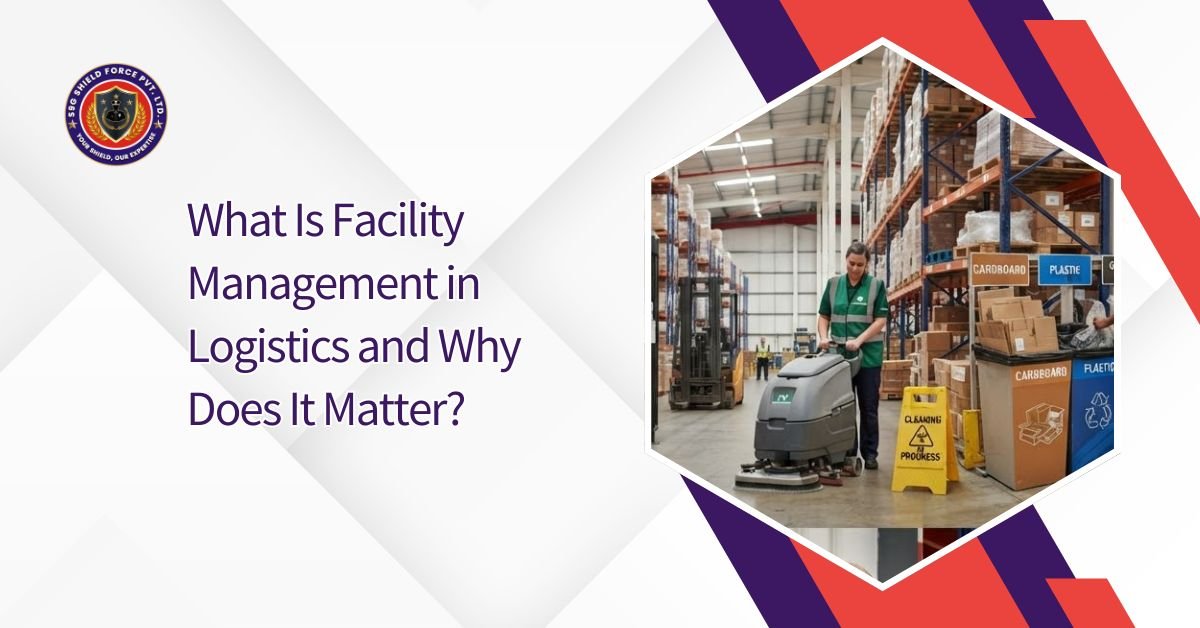
Housekeeping services are not just about appearances. In logistics facilities, cleanliness directly affects safety, hygiene, and workflow. Dust, waste, oil spills, and clutter can create hazards and slow down operations.
Housekeeping services may include:
- Floor cleaning
- Dock area cleaning
- Restroom maintenance
- Common area upkeep
- Spill control
- Waste collection
- Dust removal
A clean warehouse is easier to manage, safer to work in, and better for inventory protection.
Technical Maintenance
Technical maintenance keeps essential systems running. A logistics facility depends on utilities and equipment that must work without interruption. Delayed repairs can disrupt the entire operation.
This includes maintenance of:
- Electrical systems
- Lighting
- HVAC systems
- Plumbing
- Fire equipment
- DG backup systems
- Dock equipment
- Material handling support systems
Planned maintenance helps prevent downtime and improves the working life of these systems.
Fire And Safety Management
Fire and safety management is critical in industrial and logistics spaces. Warehouses often store large volumes of goods, packaging materials, and equipment, which makes fire preparedness essential.
This service includes:
- Fire extinguisher checks
- Hydrant inspections
- Exit path maintenance
- Safety drills
- PPE compliance
- Hazard reporting
- Emergency readiness planning
When safety is managed properly, the risk of major disruption decreases significantly. Facility managers should regularly review applicable fire safety requirements for warehouses to ensure preparedness and compliance.
Pest Control
Pests can damage inventory, packaging, and hygiene standards. Logistics facilities that store food, textiles, or sensitive products must pay close attention to pest control. Regular pest management helps protect goods and maintain a clean, compliant environment.
Waste Management
Warehouses generate packaging waste, damaged materials, and operational waste. Proper waste management keeps the facility organized and supports environmental responsibility.
This service may include:
- Waste segregation
- Collection and disposal
- Recycling support
- Hazardous waste handling
- Clean disposal practices
What Challenges Do Logistics Facilities Face Without Proper Facility Management?
Without proper facility management, logistics operations can face serious issues. Even one weak area can affect the whole system.
Read more : Logistics Security Challenges and How Professional Guards Solve Them
Equipment Breakdowns
When maintenance is ignored, machines and systems fail unexpectedly. This causes delays and raises repair costs. It can also interrupt loading, unloading, and dispatch schedules across the facility. Over time, repeated breakdowns reduce equipment life and create avoidable operational stress.
Poor Housekeeping
Cluttered and dirty areas increase the risk of slips, falls, contamination, and workflow confusion. They also make it harder for staff to move safely and complete tasks on time. A poorly maintained space can quickly affect both productivity and workplace discipline.
Theft And Unauthorized Access
Weak security can lead to inventory loss, damaged trust, and operational disruption. It may also expose the facility to internal misuse and external threats. Even small security gaps can create major financial and reputational damage.
Safety Hazards
Unmanaged fire systems, blocked exits, or poor lighting can create dangerous conditions for workers. These issues increase the chance of accidents and slow down emergency response. A weak safety setup can put both people and property at serious risk. Strong facility management also supports compliance with evolving warehouse safety standards in India, helping logistics businesses create safer workplaces and reduce operational risks.
Compliance Issues
Logistics facilities must follow safety, environmental, and operational rules. Poor management can lead to penalties and reputational damage. It can also result in failed inspections and unnecessary legal complications. Staying compliant helps the business operate with confidence and consistency.
Higher Operating Costs
Emergency repairs, wasted energy, and equipment downtime all increase expenses. Without proper facility management, these costs can grow month after month. A planned approach helps control spending and improves long-term efficiency.
How To Choose The Right Facility Management Partner For Logistics Businesses?
Choosing the right facility management partner is important because logistics operations need more than basic support. They need a team that understands speed, scale, safety, and consistency.
Look for a partner that offers:
- Experience in logistics and industrial environments
- Skilled and trained staff
- Strong security and housekeeping support
- Preventive maintenance capabilities
- Safety and compliance knowledge
- Fast response times
- Scalable services
- Clear reporting and communication
- A professional approach to operations
The right partner should understand how a logistics site works and provide services that fit the daily demands of the business.
What Are The Future Trends In Logistics Facility Management?
The future of logistics facility management is becoming smarter, more sustainable, and more data-driven. Businesses are moving toward systems that improve efficiency while reducing waste and risk.
Key trends include:
- Automation in maintenance and monitoring
- Predictive analytics for equipment care
- Smarter energy use
- Sustainable cleaning and waste practices
- Integrated security systems
- Digital inspection records
- Green facility operations
As logistics businesses continue to grow, facility management will become even more important in supporting performance and resilience.
Take The Next Step Toward A Safer And More Efficient Logistics Facility
Why should your logistics facility run with less efficiency than it deserves? A well-managed logistics site needs more than routine support. It needs a partner that understands security, housekeeping, maintenance, and daily operational demands with equal care.
At S9G Shield Force Pvt Ltd, we provide reliable, professional solutions designed to help logistics spaces stay safe, clean, and productive. As the best facility management company for logistics parks in PCMC, we bring the support your business needs to stay focused on operations.
Whether you manage a warehouse, logistics park, or industrial facility, our team is ready to deliver dependable service that strengthens your day-to-day performance. Talk to our facility management specialists today and let’s discuss how we can support your logistics facility.
Frequently Asked Questions
A facility management company handles the day-to-day support services needed to keep a warehouse running smoothly. This may include security, cleaning, equipment upkeep, fire safety checks, pest control, and utility support.
Warehouse facility management is important because it helps reduce downtime, protect inventory, improve safety, and support smooth operations. It also helps businesses maintain compliance and control operating costs.
Hard facility management covers physical systems such as electrical work, plumbing, HVAC, and fire equipment. Soft facility management includes services like security, housekeeping, pest control, and waste management that support daily operations.
Facility management helps reduce warehouse costs by preventing equipment breakdowns, avoiding emergency repairs, improving energy use, and extending the life of assets through regular maintenance.
Preventive maintenance is important because it helps identify and fix issues before they cause major breakdowns. This reduces disruptions, improves safety, and keeps operations running without unnecessary delays.
Many logistics businesses choose to outsource facility management because it gives them access to trained staff, faster service, better compliance support, and a more efficient way to manage large or complex facilities.